Custom Pencil Case Logos: Check Wear, Label Edges and Pack Contact
Approve a custom pencil case logo beyond its digital proof: check label edges, handling wear and packaging contact before your retail or promotional order.
Your client has approved the logo size and color. The pencil case looks right in the mock-up, and the launch date is approaching. There is still an uncomfortable question: will the branding look acceptable after the product is handled, packed, unpacked and used?
For a promotional-products company, the recipient may remember the campaign through this small object. For a stationery distributor, a worn or lifting mark can become a shop complaint. The logo is not simply decoration; it is the part of the product that carries your client's name.
A digital proof cannot answer a wear question. Before ordering custom pencil cases, approve the branding as a physical part of the finished product. The method below is general buyer guidance, not a claim about NBX's laboratory procedures or a guarantee of service life.
First identify what is carrying the logo
Do not let the word “logo” stand in for a specification. Ask which surface will carry it and how the mark or label will be applied and attached. A fabric label, a decorated fabric panel and a sticker on a plastic shell need different checks.
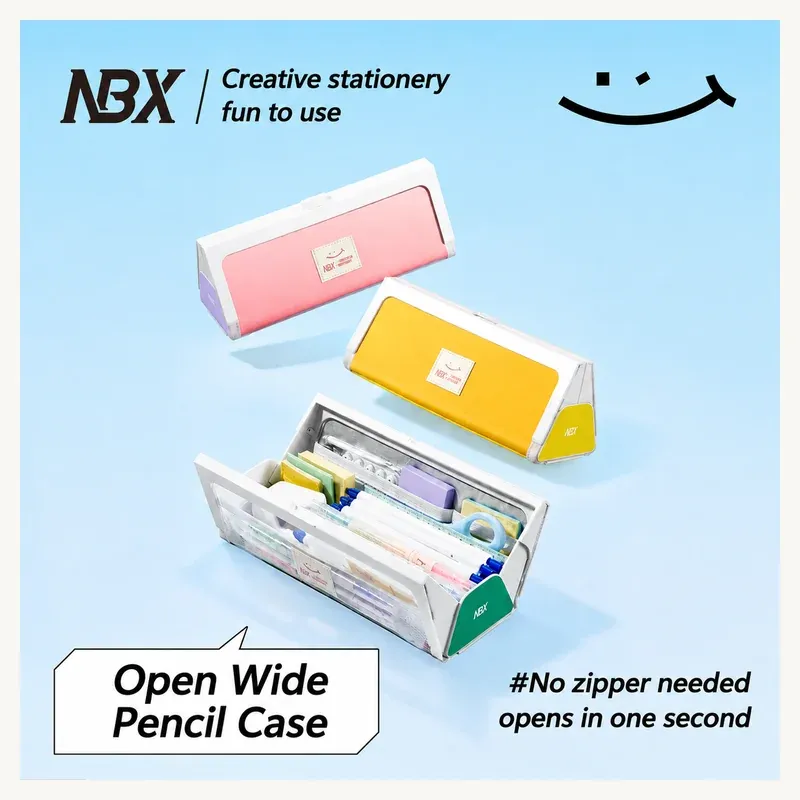
The NBX customization material provides useful examples. Its Magnetic Gear and Wide-Opening pencil cases combine ABS plastic and fabric. The customization choices identify logo labels, fabric colors or patterns, plastic-frame colors and packaging boxes separately. The ABS long multifunction pencil case also has a listed sticker-pattern customization route.
These details describe possible surfaces and customization scopes, not a confirmed printing process for every model. Do not assume embroidery, heat transfer, a particular adhesive or a wash rating from a product photograph. Request the proposed construction for your exact order.
On the brief, give each branded area its own line: product model, surface, logo dimensions, position, artwork revision, application or attachment method, and required care instructions. If the package carries the logo but the product does not, state that too. It is a different offer from a permanently branded product.
Ask for a decorated sample, not only a blank
A blank sample is useful for size, opening and general feel. It does not show whether fine letters will remain readable on the selected surface, or whether a label's corners will catch during handling.
Request a sample using the proposed branding construction on the intended material and color. Ask whether it represents production materials and processing or is only a presentation mock-up. If it is a mock-up, identify what remains unproved before signing the bulk-order approval.
Start with photographs of the untouched sample. Include the whole pencil case, a close view of the mark and its edges, and the branded area beside a scale. Record the sample ID and artwork version. For a label, inspect its attachment and surrounding surface; for a sticker, inspect alignment, bubbles and visible edges; for a fabric pattern, review clarity where the surface bends or meets the frame.
Color approval is a separate decision. Our general stationery quality-control checklist explains how appearance and function fit into the wider order record. Here, the question is what changes after handling—not whether the first untouched photograph looks attractive.
Make a small, repeatable handling comparison
Agree the sample quantity, handling routine and commercial acceptance criteria with the supplier before using the results to reject or approve an order. If your retailer or client specifies a laboratory test, use that requirement through a qualified testing partner. A desk check is a screening exercise, not a substitute for a named test standard.
For an initial comparison, keep one identified sample untouched and review the others through the same documented routine:
- Open, load, close and carry the case as an ordinary user would, within its confirmed operating limits.
- Observe where fingers, stationery, the frame or a bag lining naturally touch the branding.
- If agreed for that surface, make a dry-handling comparison with a clean, soft white cloth, keeping the motion and number of passes consistent.
- Inspect for visible transfer to the cloth, loss of small lettering, changes in the surface, label-edge movement or attachment damage.
- Photograph the result beside the untouched reference under the same lighting and distance.
Record the cloth, motion, pass count, sample identity and observations. Hand pressure is difficult to reproduce, so do not turn this informal comparison into an invented abrasion rating. Its purpose is to reveal questions that need a better-defined acceptance method.
Do not introduce solvents, disinfectants, washing or aggressive scratching unless the supplier's care information and your agreed test plan support them. A fabric component does not make the assembled pencil case washable. Equally, a broad “durable” statement does not define what cleaning a customer may use.
Check the logo inside the actual pack
A mark can be acceptable on an unpacked sample and still meet an avoidable problem in its retail box. Check the proposed packed configuration: does an insert sit against the label? Does the logo face a rough fold? Can the product move so the same area repeatedly contacts the box or another component?
Unpack the sample using the intended sequence and look for fresh marks, transferred color, edge movement and adhesive residue. Request an appropriate packed-transport evaluation for the actual route; do not invent drop heights, vibration duration or temperature limits from a desk review.
Changing the insert or protective material may be more sensible than changing the whole branding method. Our stationery packaging guide helps separate protection, presentation and carton requirements. Approve the logo and its pack together, rather than treating packaging as an unrelated final step.
Send us the concern, not just the artwork
Red flags include a decorated sample made by an unexplained temporary method, “washable” wording without approved care information, a durability promise with no acceptance definition, and a changed label or decoration construction after approval.
When contacting Aura Craft World, include the pencil case model or reference image, quantity, destination market, retail or promotional use, logo file, preferred position and packaging idea. Explain the wear concern: daily school-bag contact, repeated opening, label corners, or movement inside the pack. Include any client test requirement and launch date.
NBX and Dongguan Xingbo Stationery Co., Ltd. can then review the model-specific customization scope and identify the sample and acceptance questions that need confirmation. We will not treat an untested decoration method as approved because the mock-up looks convincing.
Send your branding-and-sample brief. A useful first reply should clarify what can be sampled, what is still uncertain and what your client needs to approve before their name goes onto the order.