Sep 2, 2026Buying Guides
Wide-Opening Magnetic Pencil Cases: A Buyer's Sample Test
Test magnetic closure, loading, access and desk stability before approving a wide-opening pencil case for your school, retail or promotional range.
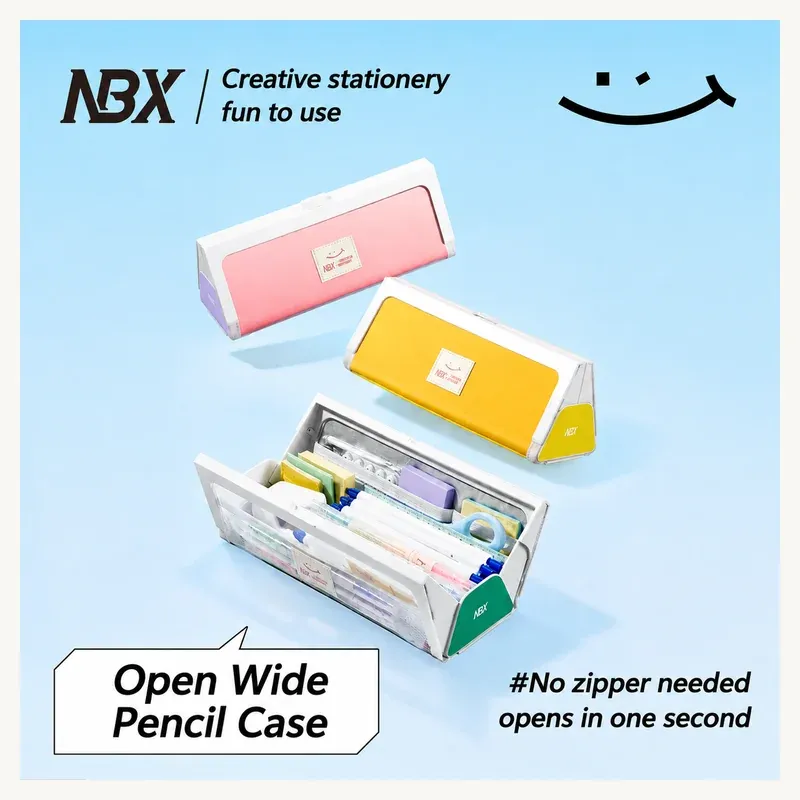
The empty sample closes neatly. Then the buying team adds the thick markers, correction tape and spare pens planned for the school range—and the edges no longer meet in quite the same way.
That moment is more useful than a perfect product photograph. A wide-opening magnetic pencil case is chosen for fast access, visible organization and the absence of a zipper. But the closure and the load are part of the same system. Approving one without documenting the other leaves a gap between the sample room and everyday use.
Here is a practical way to test the intended experience before you approve a bulk order.
Start with the confirmed product, not a category promise
The NBX catalogue describes its Open Wide Pencil Case as a zipperless design that opens and closes in a second, separates stationery for organized storage, and holds over 30 pens. The live NBX Wide Opening Magnetic Pencil Case page confirms the magnetic opening and its positioning for school, retail and distribution programmes.
Those details explain the concept. They do not define every customer's load.
“Thirty pens” can represent 30 slim writing pens, 30 thick markers, or a mixture that also includes an eraser, sharpener and correction tape. Each combination occupies a different volume and puts different pressure on the frame. The catalogue also does not publish magnetic holding force, product dimensions, material composition or a durability-cycle result. Request current specifications if those points affect your programme, and do not borrow numbers from a visually similar listing.
Before testing, give the sample an identity: model, colour, sample date and any approved construction or artwork version. Photograph it empty, open and closed. This prevents observations from one version being attached to another after revisions.
Build a load that represents your customer
Do not fill the case with whichever pens happen to be nearby. Write a reference contents list based on the target channel. A school kit, art set and promotional gift may all need different tools.
Record the item name, quantity and approximate dimensions of unusually thick pieces. Weigh the complete load if weight matters to packaging or freight. If “over 30 pens” will appear in your sales material, define the reference pen used for that statement and ask the supplier to confirm the wording before printing it.
Prepare three conditions:
- Empty: shows basic alignment and how the structure behaves without internal pressure.
- Normal load: represents what most end users are expected to carry.
- Planned maximum load: represents the fullest configuration you intend to describe or pack, without forcing items into the case.
The following is a buyer-proposed usability check, not a published NBX laboratory protocol or a substitute for agreed product-safety and inspection requirements.
Check the magnetic closure under each load
Open and close the sample according to the product instructions. Watch the two sides of the frame as they meet. Record whether the closure aligns on the first attempt, whether fabric or stationery becomes trapped, and whether the case needs extra squeezing at the maximum load.
Gently lift and carry the closed sample as it would be handled in normal use. Do not invent a drop or shake test after the fact: if resistance to a defined transport event matters, agree the method, surface, height, repetitions and acceptance result with the supplier before testing.
A practical acceptance note is specific: “Closed without trapped fabric using contents list A,” for example. “Magnet is strong” is not enough because it does not say what was inside the case or how the conclusion was reached.
Time access without turning it into a race
The catalogue's one-second message communicates quick zipperless opening. Your sample review should focus on whether the expected user can open the case normally, see the contents and retrieve a chosen item without emptying the case.
Place the normal load in its intended sections. Ask the reviewer to retrieve a slim pen, the thickest item and one small item. Record any repeated snagging, hidden items or collapse of the opening. Then return each item and close the case again.
The goal is not to publish a dramatic speed claim from one trial. It is to understand whether the wide opening and separated storage remain useful with your actual assortment.
Use the open case on the intended desk
Set the case on the surfaces common in the target market: a smooth laminate school desk may behave differently from a textured retail demonstration table. Open it as intended and retrieve items from both ends. Note rocking, sliding or tipping instead of assuming a non-slip detail performs the same way everywhere.
Check the desk footprint as well. The case may be compact when closed but wider when opened. Put a workbook beside it and confirm that the user still has practical writing space. If your range targets younger students, arrange age-appropriate user evaluation and applicable safety review rather than relying only on an adult buyer's hands.
Decide what the sample actually approves
Combine the observations in one page: sample version, contents list, load condition, desk surface, closure result, access result, photos, issue owner and final decision. Attach it to the approved physical sample and purchase specification.
Use one of three outcomes:
- Approve for the defined load: the named contents work and the case closes and opens as intended.
- Approve with a restriction: a normal load works, but the planned maximum does not. Narrow the contents or marketing claim and document the limit.
- Revise before approval: alignment, trapped material, unstable desk use or unclear specifications make the result unreliable. Request a revised sample and repeat the same check.
Red flags include a supplier changing the sample version without noting it, describing capacity without a reference load, or answering a closure concern only with an empty-case video. For the wider order plan, connect this record to your custom stationery quality-control checklist and approved packaging sample.
Send a quote request we can test against
Aura Craft World works with NBX and Dongguan Xingbo Stationery Co., Ltd. on creative student stationery. For a useful first review, request a wide-opening pencil case quotation and include:
- The product link or reference image and estimated order quantity.
- Destination market, intended user group and sales channel.
- Your representative contents list, especially thick or unusual items.
- Required colour, logo and packaging, plus the target delivery date.
- Any closure, capacity or desk-use condition that must be confirmed on the sample.
We can then confirm the current product configuration, sample route, feasible customization and the details needed for a comparable quotation. If customization depth may affect order planning, read why stationery MOQs change before finalizing the brief.
A useful sample approval does not need to pretend every customer carries the same stationery. It needs to define the load you are buying for—and show that the product remains easy to use when that load is real.