Custom Pencil Case Color Matching: A Buyer’s Sample Approval Checklist
Approve fabric, plastic frame, logo and packaging colors with one physical reference before a custom pencil case enters production or repeat ordering.
The artwork looks perfect on screen. Then the sample arrives: the fabric is softer and duller than expected, the plastic frame looks brighter, and the logo seems to belong to a different product. Nobody necessarily made a careless mistake. The color brief simply asked several materials to behave as though they were one surface.
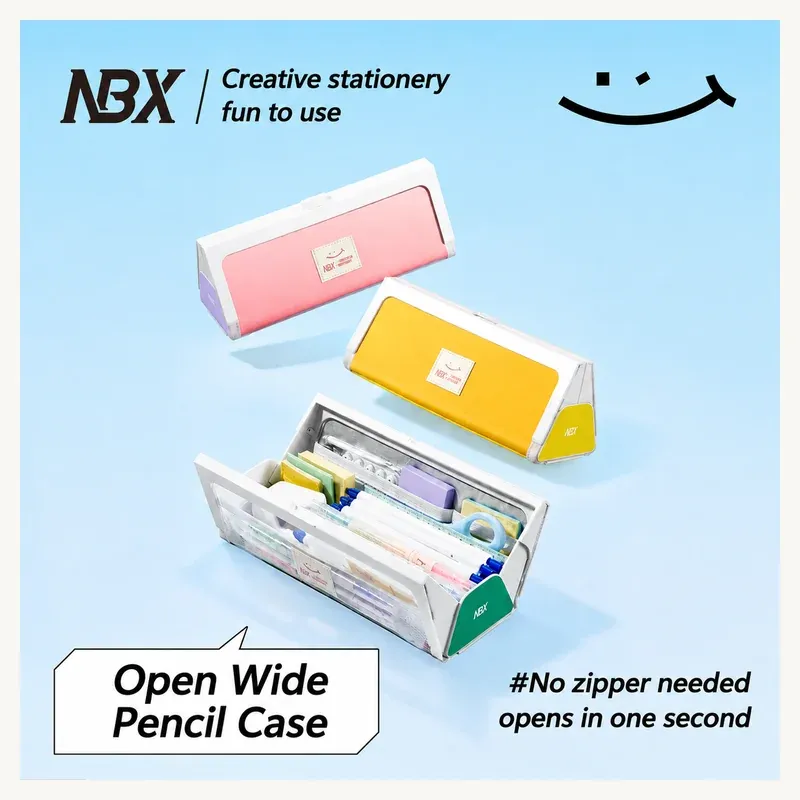
This is a common risk in a custom pencil case. The NBX customization material identifies the Magnetic Gear and Wide-Opening models as products combining ABS plastic and fabric. It also lists separate customization choices for the logo label, fabric color or pattern, plastic frame color and packaging box.
These parts reflect light differently. Texture, gloss and opacity change what the eye sees. A buyer therefore needs more than one color code and a digital rendering. The practical goal is a coherent product, supported by a physical reference that production and inspection teams can identify.
Assign a color reference to every component
Start with a component list. Name the fabric exterior, plastic frame, lining or mesh if visible, logo label, printed pattern and retail packaging. Beside each item, record whether it should match the main brand color, use a deliberate contrast or remain a supplier standard color.
Then give each customized component a reference system and code. Include the reference edition or library when relevant. A phrase such as “navy blue” is not enough, and a hex code taken from a website only describes a screen color. If the brand team supplies several files with different color values, resolve the conflict before requesting the sample.
The brief should also state the intended finish. A matte plastic frame and woven fabric may both aim at the same brand family without appearing identical. Decide whether the commercial objective is a close visual family or a stricter match. Do not leave the factory to guess which difference is acceptable.
Treat the screen proof and physical sample differently
A digital proof answers useful questions about layout: Is the logo the right size? Is the pattern repeat positioned correctly? Does packaging leave room for the barcode and required text?
It cannot reliably approve the final fabric dye, molded plastic or printed finish. Screens differ, and a rendering cannot reproduce texture or gloss.
Use the physical sample to approve material appearance. Place the sample next to the selected color reference and view it under an agreed neutral light as well as the lighting typical of the target channel. A product that looks coherent in a bright sample room may look different under a warm store light.
Photographs help document the decision, but keep the approved physical sample or swatch when possible. Record its SKU, colorway and approval date. If the team approves a revised sample, retire the earlier version clearly so two “approved” standards do not remain in circulation.
Compare components as one finished product
Inspect each color separately, then step back and judge the assembled pencil case. Ask whether the frame and fabric look intentional together. Check the logo label beside both materials rather than approving it in isolation.
Use a consistent viewing distance and orientation across samples. Compare several units, not just the best-looking one. Pay attention to:
- color shifts between the front, back and opening edges;
- visible fabric panels from different dye or print areas;
- plastic parts that appear mismatched after assembly;
- a logo whose background creates an unintended fourth color;
- packaging that promises a shade the product does not show.
Natural variation may be more visible on fabric than on molded plastic. The buyer must decide the acceptable commercial range for the intended price point and channel. If an exact numerical tolerance is required, agree it with a qualified color or inspection specialist rather than inventing a value after production.
Match customization depth to the first order
Not every launch needs every component customized. The NBX customization deck currently shows different order thresholds for packaging only, packaging plus logo label, fabric color or pattern, and plastic frame color on the Magnetic Gear and Wide-Opening models. The listed examples progress from 500 pieces for packaging only to 1,000 for packaging plus logo label, 3,000 for fabric color or pattern, and 5,000 for plastic frame color.
These figures require confirmation in a current quotation, but the underlying decision is useful. A buyer can test the market with a standard product color and custom packaging before funding a deeper color programme. A mature private-label line may justify coordinated fabric and frame development.
The trade-off is control versus commitment. Deeper customization creates a stronger brand result, but it adds sample decisions, component minimums and repeat-order details. Choose the level that matches the evidence you have for demand.
Freeze artwork, packaging and repeat-order references
Before production, combine the color record with the artwork record. Save the final logo file, dimensions, position, print or label method, packaging file and approved sample images under one revision number. Write the same reference into the purchase order or approval sheet.
For repeat orders, do not send only the old photo. Confirm whether the approved physical sample, component references and files still apply. Ask the supplier to flag any material or process change before production. A repeat order becomes risky when both sides assume that “same color” refers to the same evidence.
During inspection, compare production units with the approved reference under the agreed viewing conditions. Record which components were checked and whether variation remains within the buyer-approved commercial range. A generic “color passed” note is difficult to use when the fabric is acceptable but the logo label is not.
Red flags and a quote-ready color brief
Pause the project if the quotation says “custom color” without naming the component, if screen images are the only color approval, or if two departments use different reference codes. Also pause when the sample approval does not identify a version, or when packaging artwork shows a different shade from the actual product.
To request a useful custom-pencil-case quotation, send Aura Craft World and NBX:
- selected product model and target quantity;
- destination country and sales channel;
- color reference for each component;
- intended match or contrast relationship;
- logo and pattern files in editable format;
- packaging format, barcode and market text;
- required samples, documents and inspection method;
- approval deadline and launch date.
Dongguan Xingbo Stationery Co., Ltd. supports OEM and ODM stationery projects in Dongguan, China. The team can use this brief to separate standard-color options from components that require a new sample and current MOQ confirmation.
Review the NBX Wide-Opening Magnetic Pencil Case and NBX Magnetic Gear Pencil Case. For related planning, read our custom stationery MOQ guide, packaging guide and quality-control checklist.
Send the model, quantity, market, color references, artwork and packaging plan. We will identify the open decisions before a custom sample is prepared.